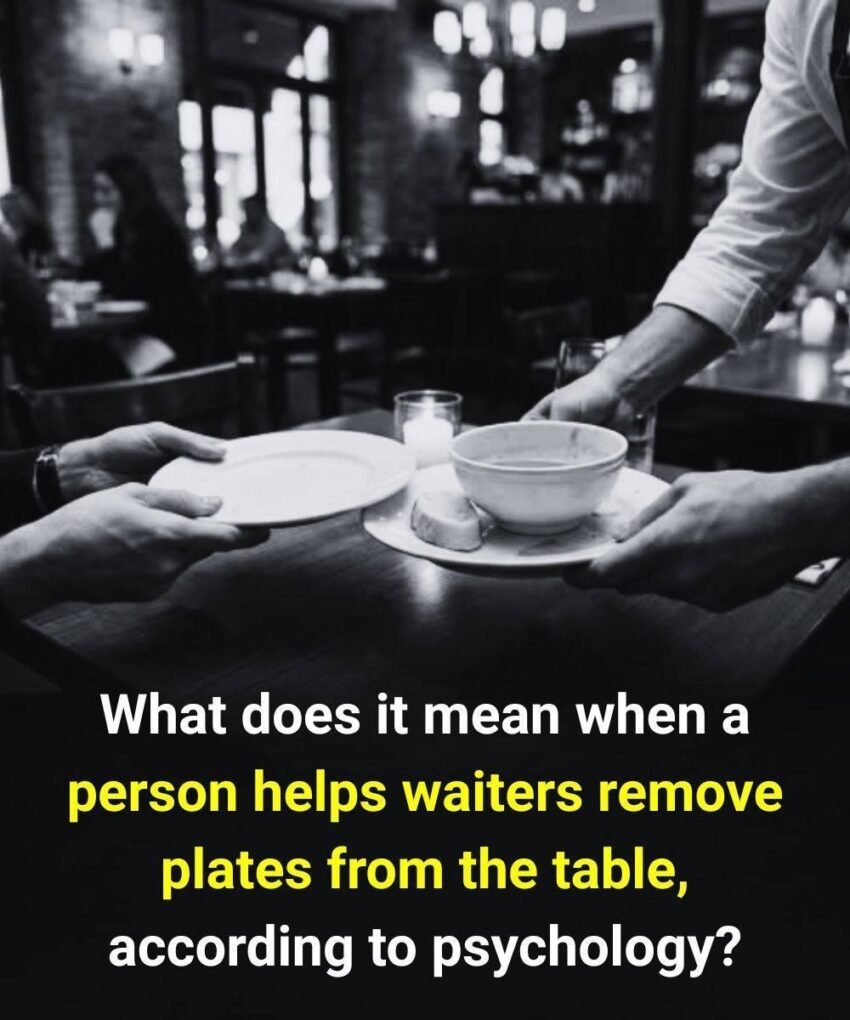
When someone helps the waiter clear the table, psychology suggests a few interesting things about their personality and social behavior:
1. Empathy and consideration
People who naturally help others, even in small ways, often have higher empathy. They notice when someone could use assistance and act without being asked.
2. Prosocial behavior
Helping a waiter is an example of prosocial behavior—actions intended to benefit others. Research shows that small acts of kindness can improve social bonding and personal happiness.
3. Social signaling
Sometimes, helping can also signal generosity and cooperation. People may unconsciously show others that they are responsible, helpful, or considerate.
4. Reduced stress and improved mood
Psychologists note that performing small helpful acts can boost the helper’s mood, reduce stress, and even activate reward centers in the brain.
5. Habit or upbringing
People who grew up in households that emphasized chivalry, manners, or helping others are more likely to act in these small but meaningful ways.
✅ Bottom line: Helping clear a table is usually a mix of genuine care, social awareness, and habit—and it can tell a lot about someone’s empathy and character.
If you want, I can also explain what subtle cues in this behavior reveal about long-term personality traits.
