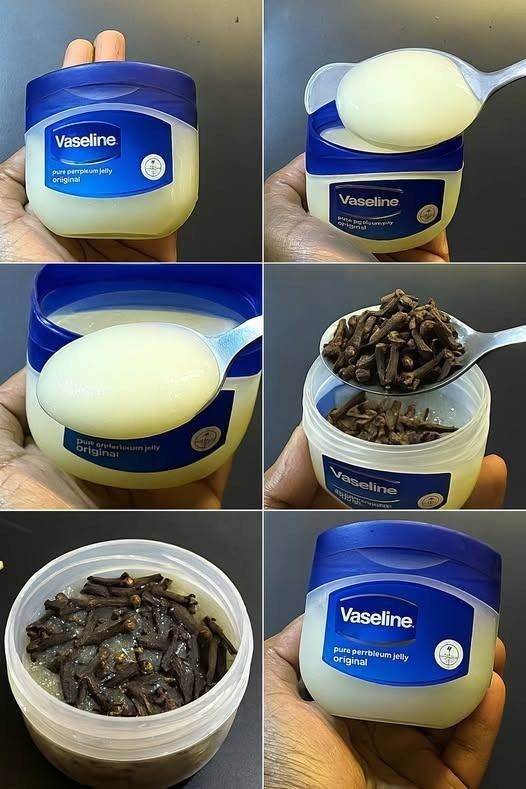
Ah, this is one of those old-school home remedy hacks that’s been floating around online. Mixing cloves with petroleum jelly isn’t a magic cure, but it does have practical uses. Here’s the breakdown:
🌿 What It Does
- Cloves contain eugenol, a natural compound with mild analgesic (pain-relieving) and antiseptic properties.
- Petroleum jelly acts as a carrier, holding the cloves in place on the skin and slowing release of the active compounds.
🩺 Common Uses
- Toothache Relief
- Dab a small amount on a cotton swab and apply near the sore tooth or gum.
- Eugenol in cloves can numb pain temporarily.
- Petroleum jelly prevents the clove oil from irritating the skin or gums directly.
- Minor Skin Irritations
- Can help soothe small insect bites or irritated areas.
- Acts as a mild antiseptic layer to prevent infection.
- Aromatic & Protective Barrier
- Clove’s strong aroma may repel some insects.
- The jelly forms a protective barrier on the skin.
⚠️ Safety Tips
- Use sparingly: Clove oil is strong and can irritate skin if applied directly.
- Avoid ingestion: This is for external use only.
- Test first: Apply a small patch to the skin to ensure no allergic reaction.
✅ Bottom line: Mixing cloves with petroleum jelly is a gentle way to harness clove’s analgesic and antiseptic properties, especially for toothaches or minor skin issues. It’s not a cure-all, but it’s a handy little trick.
If you want, I can also show a step-by-step way to make a tiny clove jelly “toothache stick” that lasts for weeks and is safe to use. 🦷
