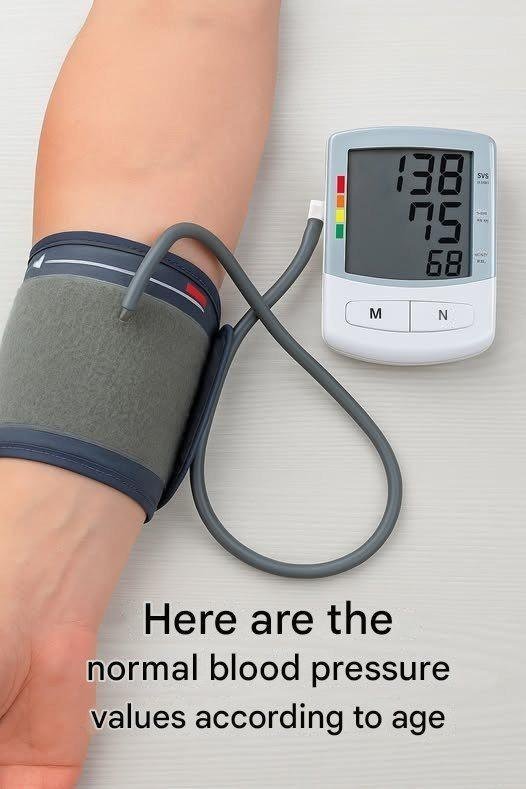
Here’s a clear guide to normal blood pressure values by age, based on recommendations from the American Heart Association and Centers for Disease Control and Prevention:
Blood Pressure Categories for Adults
| Category | Systolic (top number) | Diastolic (bottom number) |
|---|---|---|
| Normal | <120 mmHg | <80 mmHg |
| Elevated | 120–129 mmHg | <80 mmHg |
| High Blood Pressure (Stage 1) | 130–139 mmHg | 80–89 mmHg |
| High Blood Pressure (Stage 2) | ≥140 mmHg | ≥90 mmHg |
| Hypertensive Crisis | >180 mmHg | >120 mmHg (emergency) |
Typical Blood Pressure by Age
| Age Group | Typical Healthy Range |
|---|---|
| Children (6–13) | 90–110 / 55–75 mmHg |
| Teenagers (14–19) | 100–120 / 60–80 mmHg |
| Adults (20–39) | 95–120 / 60–80 mmHg |
| Adults (40–59) | 100–130 / 70–85 mmHg |
| Adults (60+) | 110–140 / 70–90 mmHg |
Notes:
- Blood pressure naturally rises slightly with age, but staying in the normal range reduces the risk of heart disease and stroke.
- Factors like weight, activity level, and genetics can affect your numbers.
- High readings on multiple occasions should be evaluated by a healthcare professional.
💡 Tip: For most adults, aiming for around 120/80 mmHg is ideal.
I can also create a visual chart showing age vs normal blood pressure so it’s easier to see what’s healthy at a glance. Do you want me to do that?
