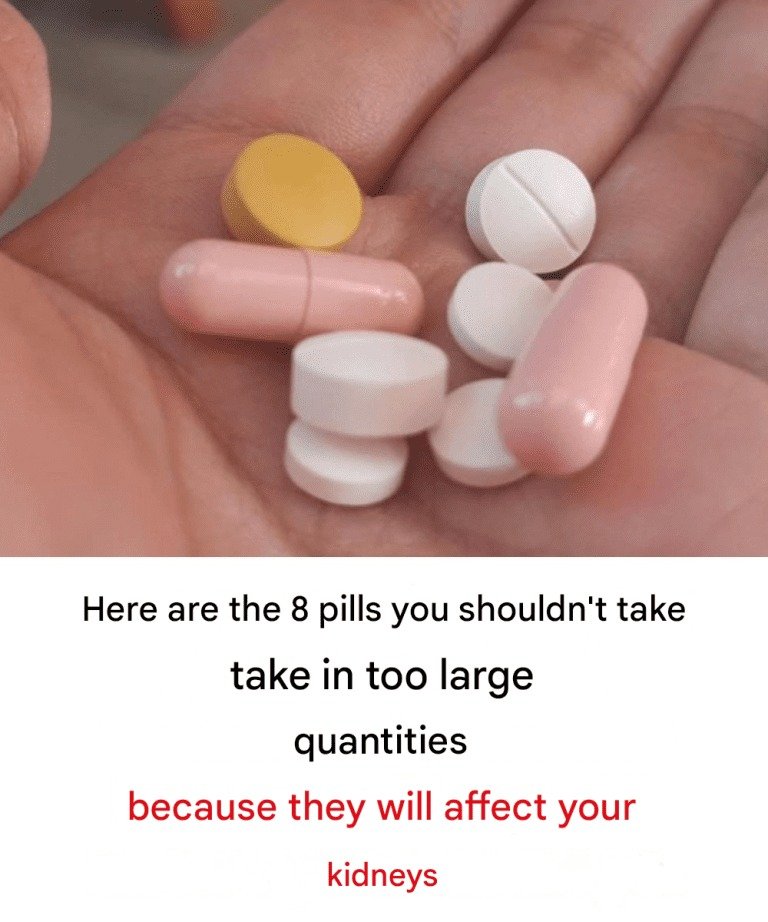
Certain medications can harm your kidneys, especially if taken long-term, in high doses, or without monitoring. Here’s a detailed guide on eight common pills that can affect kidney function:
💊 8 Pills That Can Harm the Kidneys
1️⃣ NSAIDs (Non-Steroidal Anti-Inflammatory Drugs)
- Examples: Ibuprofen, Naproxen, Diclofenac
- Why: Can reduce blood flow to the kidneys, increasing risk of acute kidney injury.
2️⃣ Certain Antibiotics
- Examples: Aminoglycosides (Gentamicin, Tobramycin)
- Why: Toxic to kidney tubules when used for prolonged periods.
3️⃣ Proton Pump Inhibitors (PPIs)
- Examples: Omeprazole, Esomeprazole, Lansoprazole
- Why: Long-term use linked to chronic kidney disease and interstitial nephritis.
4️⃣ Diuretics (Water Pills)
- Examples: Furosemide, Hydrochlorothiazide
- Why: Can cause dehydration and electrolyte imbalance, stressing the kidneys.
5️⃣ ACE Inhibitors & ARBs (in certain cases)
- Examples: Lisinopril, Losartan
- Why: Normally protective, but high doses or pre-existing kidney damage can worsen kidney function.
6️⃣ Chemotherapy Drugs
- Examples: Cisplatin, Methotrexate
- Why: Highly toxic to kidney cells; require hydration protocols and monitoring.
7️⃣ Lithium
- Used for bipolar disorder.
- Why: Long-term use can cause chronic kidney damage and reduced filtration.
8️⃣ Pain Medications with Multiple Ingredients
- Examples: Over-the-counter combination pills containing acetaminophen + NSAIDs
- Why: Chronic use can overload kidneys, especially in older adults or those with kidney issues.
⚠️ Precautions
- Stay hydrated and avoid taking high-risk drugs unnecessarily.
- Monitor kidney function (creatinine, eGFR) if using these medications long-term.
- Never stop prescribed medications without doctor guidance—ask about safer alternatives if needed.
✅ Bottom line: Medications like NSAIDs, certain antibiotics, PPIs, chemotherapy drugs, and lithium can damage kidneys, sometimes silently. Awareness and careful monitoring are key to protecting kidney health.
I can also make a “Kidney-Safe Medication Guide” showing which drugs are safer, what to monitor, and alternatives.
Do you want me to do that?
