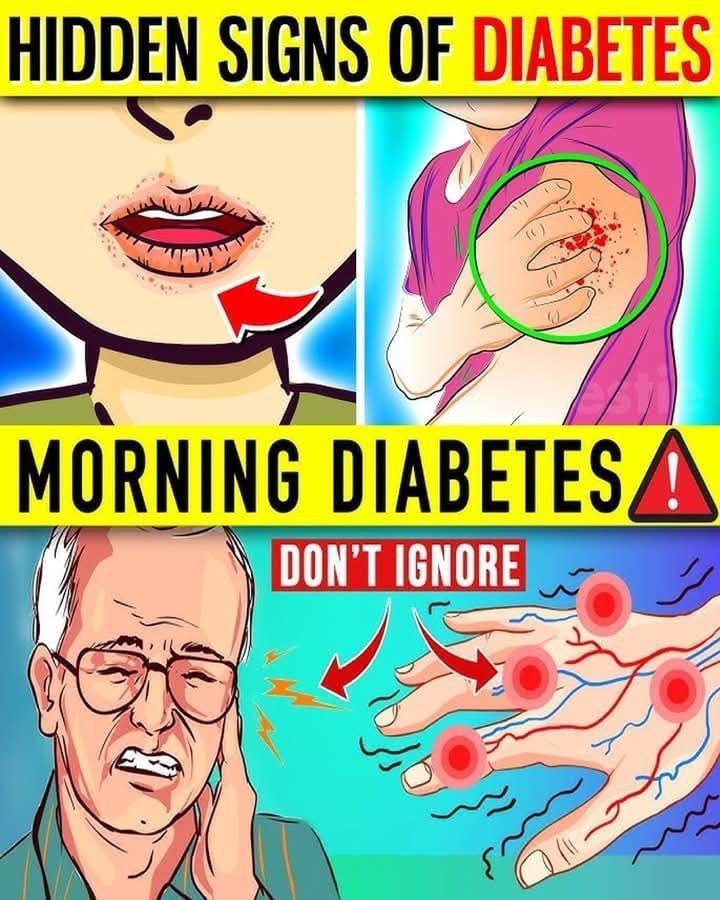
Here’s a clear breakdown of 7 signs your blood sugar may be fluctuating at night, along with practical tips to help stabilize it. This is especially useful for people with type 2 diabetes or prediabetes, or anyone monitoring glucose. 🌙
🌙 7 Nighttime Diabetes Signs
1️⃣ Frequent Nighttime Urination
- High blood sugar can make you pee more at night (nocturia).
- Tip: Limit fluids 1–2 hours before bed and monitor blood sugar before sleeping.
2️⃣ Night Sweats
- Fluctuating glucose can trigger excessive sweating, often linked to low blood sugar (hypoglycemia) during sleep.
- Tip: Keep a small carb snack ready if you experience low sugar symptoms.
3️⃣ Restless Sleep or Insomnia
- Blood sugar swings can disrupt sleep cycles, making it hard to stay asleep.
- Tip: Eat a balanced dinner with fiber and protein, avoid sugary snacks right before bed.
4️⃣ Morning Headaches
- Can be caused by overnight high or low glucose levels.
- Tip: Check your fasting blood sugar in the morning and adjust evening snacks or meds with your doctor.
5️⃣ Nighttime Cravings
- Low blood sugar at night may trigger late-night hunger, especially for carbs.
- Tip: Opt for slow-digesting snacks, like a small handful of nuts or Greek yogurt.
6️⃣ Nighttime Leg Cramps
- Often related to poor circulation or electrolyte imbalance from high glucose.
- Tip: Stay hydrated and stretch your legs before bed.
7️⃣ Feeling Tired or Irritable in the Morning
- Overnight glucose spikes and drops can leave you exhausted or moody.
- Tip: Maintain consistent meal times and avoid sugary drinks in the evening.
🩺 Extra Tips to Stabilize Blood Sugar Overnight
- Eat a balanced dinner: protein + complex carbs + fiber.
- Avoid alcohol before bed: can cause blood sugar swings.
- Check your sugar before sleep: know if you need a small snack.
- Stay active during the day: improves overnight glucose control.
- Consult your doctor if nighttime symptoms persist—they may need medication or insulin adjustments.
✅ Bottom line: Recognizing these nighttime signs helps you take proactive steps to stabilize blood sugar, improve sleep, and protect long-term health.
I can also make a quick nighttime routine with 5 simple steps that helps most people keep blood sugar steady while sleeping—no complicated tracking required. Do you want me to make that?
